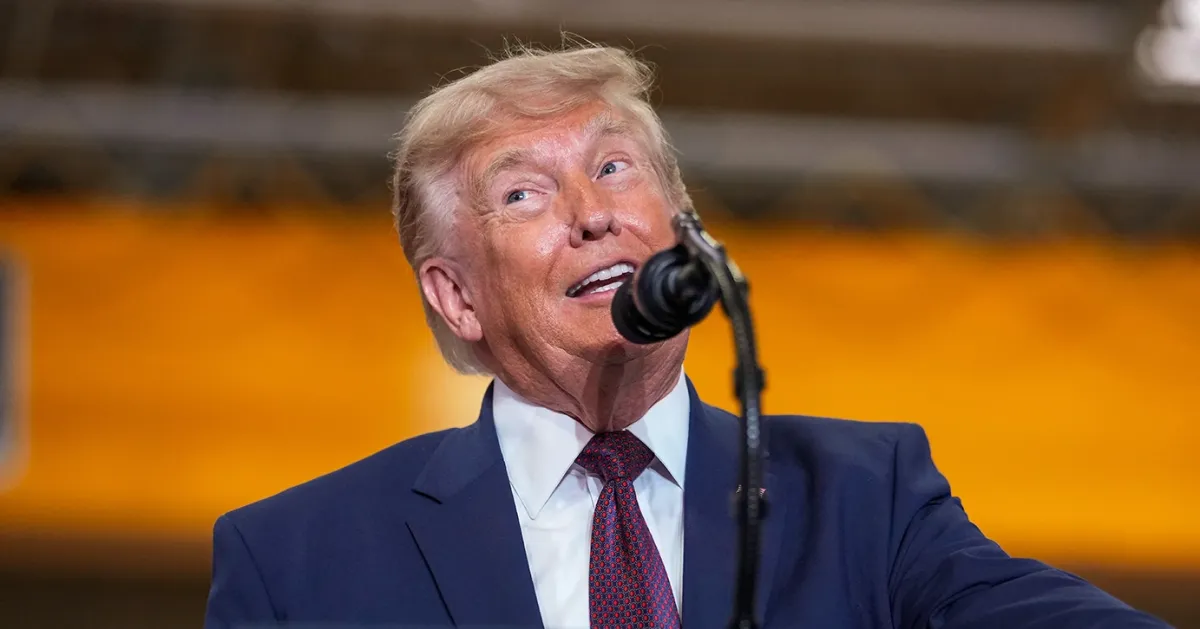
Trump centers private sector investments as voters stress affordability
President Donald Trump is testing his private-sector-focused midterm message in battleground Pennsylvania, as economic angst continues to cloud Republicans’ electoral chances in 2026.
Read more Rubio launches global effort to target left-wing extremists
The president is expected to speak about nearly $10 billion of new investments made in the defense industry on Wednesday at an event hosted by Sen. Dave McCormick, R-Pa., a former hedge fund manager, in a competitive House district that could help decide which party controls the chamber.
McCormick announced the new investments ahead of Wednesday’s Pennsylvania Defense and Innovation Summit, adding that the cash injection is expected to support more than 4,000 jobs aross the state.
Executives from some of the biggest companies in finance and defense, including SpaceX, Boeing, Lockheed Martin, Palantir, JPMorgan Chase and Blackstone, are expected to attend. The president’s stock portfolio, which the White House says is managed by his kids, includes investments in nearly all of those major corporations. (SpaceX, which recently went public, was still a private company at the end of Trump’s latest disclosure period.)
The trip brings Trump to Pennsylvania’s 10th Congressional District, a key Democratic pickup opportunity. The district is part of the Democratic Congressional Campaign Committee’s “Red to Blue” program, which offers leading candidates special resources. Rep. Scott Perry, R-Pa., who won by just 1 percentage point in 2024, is facing a rematch against former local news anchor Janelle Stelson.
Trump, the GOP’s top messenger, has frequently overstated the growth of private investment the U.S. has attracted under his leadership and pointed to stock market gains as a sign of the nation’s economic might. Americans, however, historically care more about their personal financial situations, according to political strategists.
“The average American sits down at their kitchen table at night and says, ‘Wow, I hear that everything’s doing great in Wall Street and the investment world, but I don’t feel it myself,’” said Evan Siegfried, a Republican strategist. “The window is definitely closing” for people “to feel the private investments that are going into all these places across the country.”
Last year, McCormick rolled out a $92 billion package of commitments to invest in Pennsylvania’s energy sector.
Such announcements come with a risk of long-term scrutiny or a lack of public awareness that would help boost candidates. Factory build-outs, for instance, often take years to come to fruition — if they happen at all. Commitments from foreign countries to invest in American industries are also sometimes left unfulfilled.
Although Trump is known to exaggerate, U.S. spending on factory construction and manufacturing output are at historic highs.
Read more Facing court losses, Trump turns to prime time to push election conspiracy theories
“We have more things being built: factories, plants, AI, automobile plants are being built at record numbers, more than we’ve ever had ever before,” he said Tuesday.
The White House took a victory lap after the Consumer Price Index showed inflation cooled in June, marking its largest one-month drop since 2020. That dip, Trump told reporters Tuesday, “means prices are coming way down, and we’re doing a great job, and remember that for the midterms.”
The reading was largely driven by a decline in gas prices, but resumed fighting in the critical Strait of Hormuz threatens to drive up prices again, prompting economists to warn that relief may be temporary.
A majority of voters, including critical independents, rated the state of the economy negatively in mid-June, according to a recent survey conducted by Winthrop University/YouGov. Most Americans were also not optimistic about the economic outlook over the next year. Two-thirds of Republican voters, however, said the economy was in “very good” or “fairly good” shape.
While speaking to reporters, Trump blamed former President Joe Biden for inflation, despite recent polls showing that Americans attribute the rising costs of living to his presidency now, more than a year into his second term. “Boy, he could create inflation like nobody, and I inherited that, and I got blamed for it, and it’s not my fault,” Trump said.
According to economists, the war with Iran, tariff policies and deportations of undocumented immigrants have all contributed to higher costs since Trump returned to office.
Under Biden, the White House also attempted to tout private-public investments from a string of spending bills for microchips, infrastructure and clean energy. But Democrats, too, were beset by poor economic public sentiment. In 2022, Democrats lost their House majority while keeping control of the Senate.
The Trump White House could be staring down a similar fate.
“It’s going to vex White Houses for quite a while until the economic impact is felt on Main Street,” Siegfried said.
Read more Democrats push Trump library to account for millions in lawsuit settlement funds










Post Comment