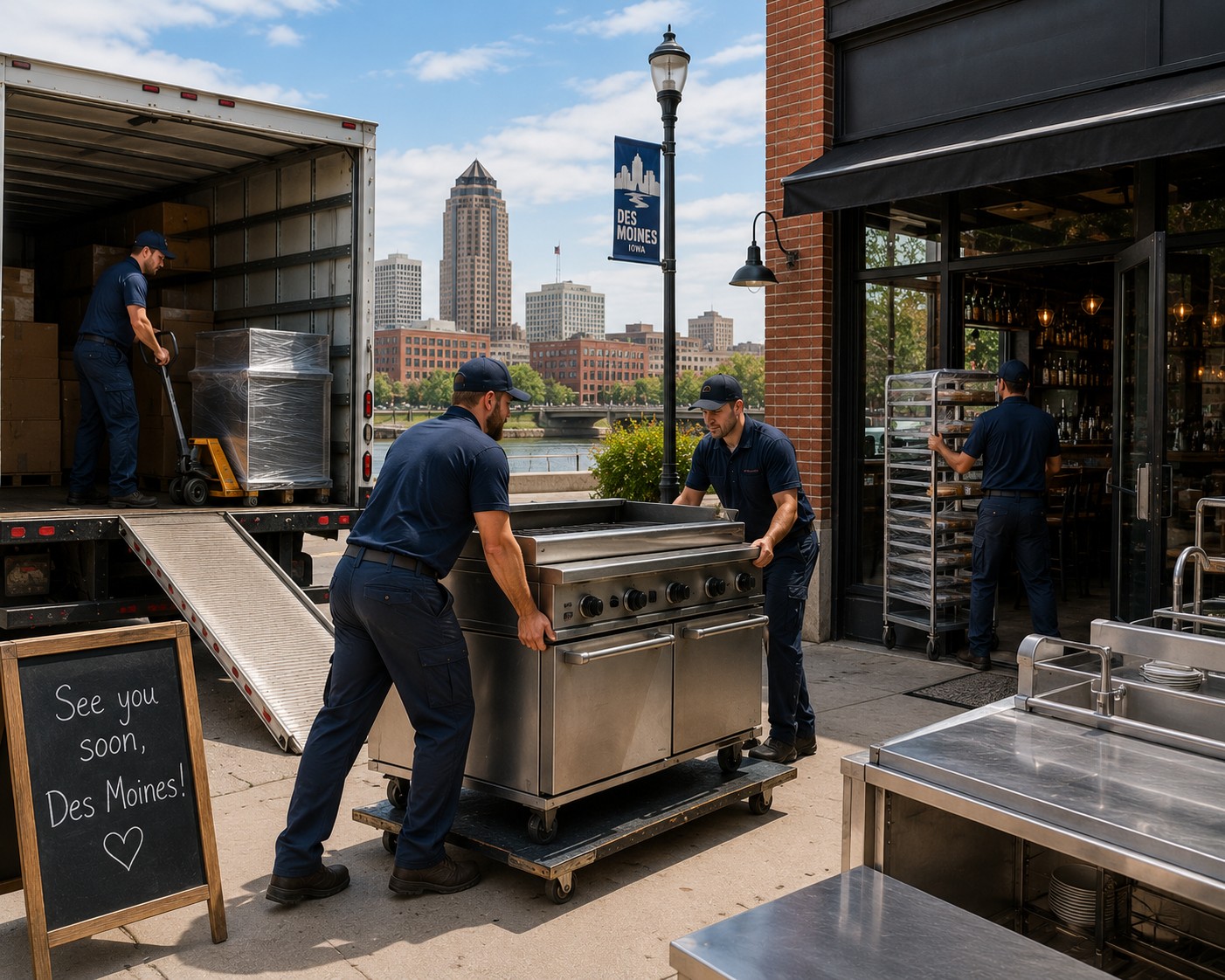
Moving Restaurant Equipment in Des Moines Without Losing Valuable Service Time
Relocating a restaurant in Des Moines is a different kind of commercial move. The dining room may be packed quickly, but the kitchen requires careful coordination. Walk-in refrigerators, commercial ranges, stainless-steel workstations, ovens, fryers, mixers, dishwashers, and storage systems all have different handling requirements.
For restaurant owners preparing such a transition, the process should begin with a clear equipment strategy. Moving information and commercial relocation options can be reviewed at https://starvanlinesmovers.com/ before scheduling the transfer and discussing the specific requirements of the kitchen.
Build an Equipment Map Before Anything Moves
The first task is to identify exactly what will leave the current restaurant.
Create an inventory of major appliances, smaller machines, shelving, preparation stations, storage units, and removable components. Include dimensions and approximate weights for unusually large pieces.
This inventory gives Iowa Movers a better understanding of the shipment and helps determine how much labor, protection, and vehicle capacity may be needed.
Separate the Essential From the Replaceable
A restaurant does not necessarily need to transport every item in its current kitchen.
Use the relocation as an opportunity to identify obsolete equipment, damaged shelving, redundant appliances, and items that will not fit the new layout. Removing unnecessary pieces before moving day can reduce both transportation volume and handling time.
Measure the Entire Journey
The dimensions of the equipment are only part of the equation. The route it must travel is equally important.
Measure kitchen doors, corridors, elevators, stairways, loading docks, and exterior entrances. Pay attention to sharp corners where large refrigeration units or commercial ovens may need to be turned.
A piece of equipment that fits through a doorway may still be impossible to maneuver through the next section of the route.
Coordinate Utilities Before the Crew Arrives
Commercial kitchen equipment frequently involves gas, electricity, water, drainage, or refrigeration systems.
Arrange for qualified professionals to disconnect equipment that requires specialized utility work. The same applies to reconnection at the new location. Moving crews should not be expected to improvise with permanent utility connections.
Create a Shutdown Sequence
A simple timetable can prevent confusion:
Close: Finish the final service and shut down the kitchen.
Prepare: Clean, empty, disconnect, and secure equipment as required.
Transfer: Move and protect the equipment according to the established route.
Install: Position major units and coordinate reconnection.
Test: Confirm that essential equipment operates correctly before reopening.
This sequence gives management a practical framework for coordinating multiple teams.
Protect More Than the Appliance
Commercial equipment often has vulnerable components that are easy to overlook.
Protect control panels, handles, glass doors, shelves, removable trays, and stainless-steel surfaces from impact and scratching. Remove loose components where appropriate and label them so they remain associated with the correct appliance.
For a business evaluating Iowa Movers, questions about equipment protection and component organization should be part of the initial conversation.
Keep Des Moines Access in the Schedule
The restaurant’s location can influence the loading process just as much as the equipment itself.
Before moving day, determine where the truck can stop and whether the crew will have enough room to maneuver large appliances. If the restaurant occupies a busy commercial area, confirm parking or loading arrangements in advance.
Also check whether building management has requirements for elevator use, loading hours, entrances, or protective measures inside shared spaces.
Prepare the New Kitchen Before Delivery
A new restaurant location should be ready to receive equipment before the truck arrives.
Clear construction materials from access routes and confirm that the destination has sufficient doorway clearance. Major appliances should have designated positions, while necessary utility connections should be prepared according to the installation plan.
A simple floor diagram can make unloading much more efficient. Instead of placing every appliance in an open area and rearranging it later, movers can work toward predetermined positions.
Keep the Business Running Where Possible
The biggest cost of a restaurant relocation is not always transportation. Lost operating time can be even more significant.
Consider the restaurant’s busiest periods when selecting the moving date. A planned closure, overnight transfer, or low-volume period may create less disruption than attempting to move during an active service schedule.
Management should coordinate the move with employees, contractors, technicians, suppliers, and the moving crew so that each stage follows the next without unnecessary gaps.
Keep Reopening Essentials Accessible
Do not bury every useful item inside the shipment.
Set aside cleaning materials, basic tools, paperwork, communication equipment, labels, chargers, and other necessities needed immediately after delivery. If certain small appliances are essential for the first service, make them easy to identify.
This creates a small operational bridge between the old kitchen and the new one.
Choose a Moving Team That Understands Commercial Equipment
A restaurant equipment transfer requires more than loading heavy objects onto a truck. It involves measurements, access planning, protective packing, utility coordination, scheduling, and careful placement at the destination.
When comparing commercial moving providers, look for a team prepared to discuss these details before moving day. Experienced Iowa Movers can help turn a complicated equipment transfer into a coordinated sequence rather than a last-minute scramble.
For a Des Moines restaurant, successful relocation means more than delivering appliances. It means getting the kitchen ready to support the next service with as little unnecessary downtime as possible.












Post Comment