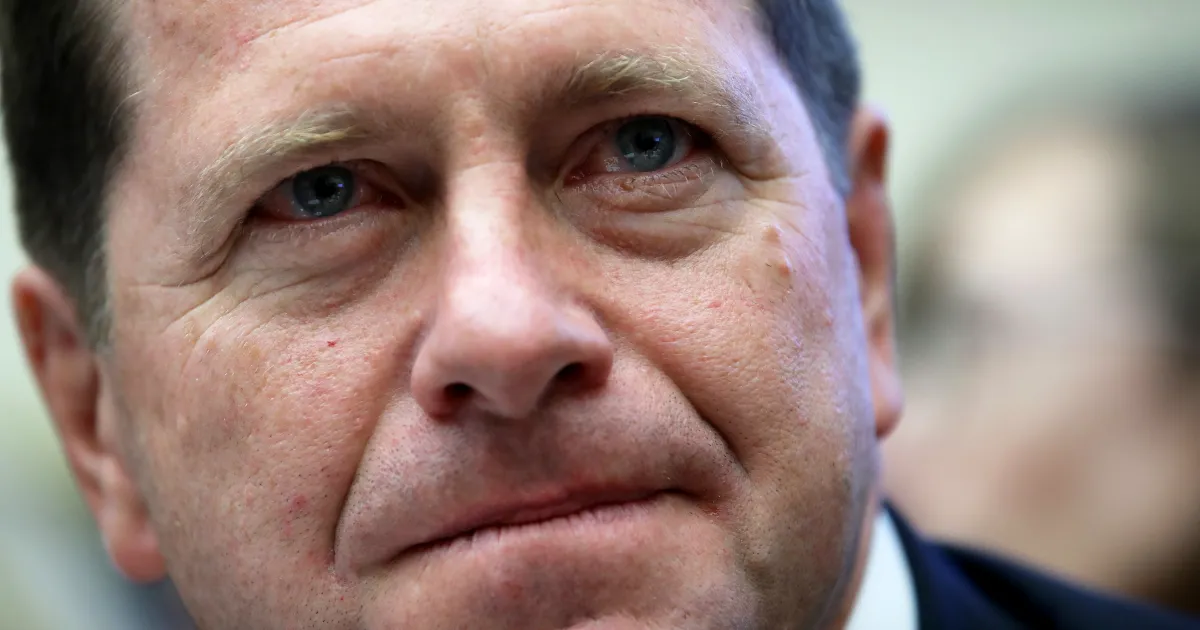
The biggest question Jay Clayton has to answer before becoming DNI
Only eight people have served as the United States’ director of national intelligence. Jay Clayton is hoping to become the ninth. When he sits before the Senate Permanent Select Committee on Intelligence on Wednesday morning, he will face appropriately tough questions about how he would lead and coordinate the nation’s 18 intelligence agencies.
Read more Trump plans primetime speech on voting machines and foreign influence in elections
Clayton appears to have enough backing, including among key Democrats, to sail through the confirmation process.
America has adversaries, such as China and Russia, with formidable espionage services, but it’s likely that the sharpest questions Clayton will face won’t be about how he’ll manage those threats. Incredibly, it’s now more important to learn how Clayton will manage expectations from a president who may want to turn this nation’s spies against America’s own citizens.
When Clayton’s name was first put forward to head the Office of the Director of National Intelligence, there was a bit of a sigh of relief that President Donald Trump was tapping someone so serious. For the past 14 months, Clayton, as the U.S. attorney for the Southern District of New York, has been one of the most prestigious and high-profile prosecutors in the country. Before then, the Senate confirmed him to lead the Securities and Exchange Commission during Trump’s first term.
Clayton’s most recent predecessors lowered the bar he needs to hit to be considered a viable nominee. Tulsi Gabbard, who resigned from the role in May, had proved herself to be, at best, a shaky member of Trump’s Cabinet. By the time the administration was debating whether to attack Iran this year, Gabbard had been mostly sidelined.
Distressingly, ahead of her departure, Gabbard had become interested in elections. She was present at a January FBI raid on an elections office in Georgia’s Fulton County. Fulton County is at the center of Trump’s false — and ongoing — claims that the 2020 presidential election was stolen from him. Gabbard reportedly had spent months before the January raid investigating Trump’s conspiracies surrounding the 2020 election.
Read more How MAGA cynically created a moral panic about Zohran Mamdani and Italian Americans
When Gabbard stepped down, Trump announced Bill Pulte as acting DNI, even though the law requires that the director possess “extensive national security experience.” Pulte was and is director of the Federal Housing Finance Agency, and Trump immediately set him to work by having him fire intelligence agency staffers who were deemed to be part of the so-called Deep State and who reportedly aided a White House task force reviewing classified intelligence related to U.S. elections.
The outcry from Pulte’s temporary appointment led to Democrats walking away from a deal to extend a key spying law in protest died down somewhat when Trump nominated Clayton as Gabbard’s permanent successor. Sen. Mark Warner, D-Va., vice chair of the Senate Select Committee on Intelligence, said in a statement at the time that he has “known and respected Jay Clayton for many years” and believes Clayton “is a capable public servant.” Rep. Jim Himes, D-Conn., the ranking member of the House Intelligence Committee, likewise wrote on X that Clayton’s “intelligence, temperament and deep commitment to public service will make him a terrific DNI.”
But there are reasons to be concerned. Trump tapped him for the role just three days after Clayton appeared on CNBC and was asked about the pace of vote counting following California’s primary elections. Rather than dismissing as out of hand the suggestion that anything untoward was causing the lengthy count, Clayton instead said America is “doing an absolutely terrible job” on election integrity, “and the American people are right to question it.” He added that the state’s mail-in balloting “makes the opportunity for fraud so much greater when that is not necessary.”
Trump had made similar, baseless points about California’s elections and the safety of mail-in voting more broadly. But there’s been no evidence about widespread fraud or irregularities in voting, either in California’s most recent primaries or the 2020 election. Clayton did clarify when challenged that he was “not speculating about fraud. I’m not saying there is fraud,” before adding that “the opportunity for fraud makes no sense to me.” It’s troubling that he gave credence to the premise at all. It’s also unsurprising given how often it’s been used as a litmus test for staying in Trump’s good graces.
Clayton needs to make clear where he stands on elections, and the role of the ODNI in protecting elections, before he’s given the keys to the most powerful intelligence community in the world. Democrats need to ask him whether he would take part in Trump’s efforts to relitigate the 2020 election and if he would follow orders to intervene in future balloting. The competence that Clayton represents, especially relative to the acting DNI and former DNI, has led to him having a lot of support already. But that’s a very low bar to clear, and if he doesn’t vow to stay out of American elections, his competence alone cannot be enough reason to green-light his nomination.
Read more What the collapse of Trump’s Hormuz fee scheme reveals










Post Comment