What the collapse of Trump’s Hormuz fee scheme reveals
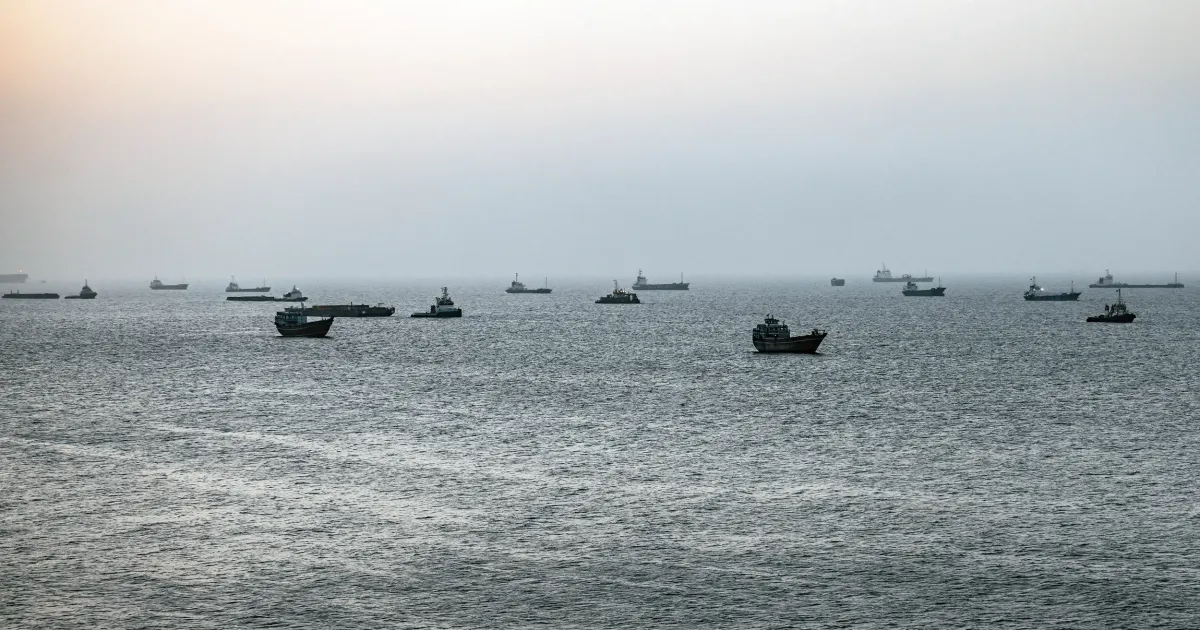
Shortly after declaring the U.S.-Iran ceasefire “OVER,” President Donald Trump unveiled a brand-new scheme. He declared on Monday the U.S. will henceforth be known as “THE GUARDIAN OF THE HORMUZ STRAIT,” which would entail enacting a naval blockade of Iran while “providing safety and security” for permitted ships to pass through the waterway. All this for the low price of 20% worth of escorted ships’ cargo.
Read more E. Jean Carroll finally gets Trump’s $5 million — plus interest
Just one day later, the president announced he was revising the plan. Trump said the U.S. would maintain the blockade but replace the toll with a new investment deal from Gulf states.
It’s unclear why Trump pivoted, but perhaps someone in the White House explained to the president that his first plan was nonsensical and would hurt the U.S.’ negotiating position against Iran. However, the second plan is hardly a better way to wind down a conflict he knows he has lost. As the U.S. and Iran resume hostilities, Trump is demonstrating he lacks the basic rationality required to bring this foolish war to an end, and is narrowing the path to a peace deal that is not pure humiliation for his administration.
Trump’s first announcement was basically a souped-up version of his “Operation Freedom” effort in May. At that time, he promised to escort merchant ships through the strait as a “humanitarian gesture” despite Iran’s promise to block any such efforts. As soon as the U.S. began its efforts to escort ships out of the strait, Iran attempted to attack the ships. In about 24 hours, Trump ended the operation.
This time, Trump revived the idea of escorting ships — but with a twist of charging ships a 20% toll on cargo. It boggles the mind. What shipping company would pay an exorbitant fee for a U.S. escort in which it is likely to come under fire from Iranian drones, missiles and boats? There’s also no explanation for why this effort would work when the last one immediately failed.
The proposal to charge a fee undermined his administration’s central argument against Iran’s own plans to charge ships a toll for passing through the strait: that a toll violates international law and the principle of freedom of navigation. Tehran immediately pounced on the opportunity. Iranian Foreign Minister Abbas Araghchi quipped on X, “POTUS is absolutely right. Whoever provides secure and safe passage of commercial vessels through the Strait of Hormuz should be compensated for this service.”
Read more The courts won’t give cover to Trump’s IRS self-dealing
He added, “Iran has always been the GUARDIAN of the Strait and will remain so FOREVER. 20% is of course too much. We will be fair.”
Though Trump reversed course, it could be argued that just by proposing the toll, the die has been cast. The U.S. hardly had authority to claim it was upholding international law in the strait before this, but Trump just explicitly backed the idea that whoever controls the strait ought to be able to charge ships for their passage.
Trump’s second plan is also problematic. It’s entirely unclear what he means when he says he intends to “replace the 20% United States Reimbursement Fee with Trade and Investment Deals that the various Gulf States will be making into the United States.” Why are those two things comparable? What would the deals be? Which countries would pay the U.S., and why would they commit to investments?
And most importantly, what does this have to do with ending the war?
The simple explanation is that Trump, perhaps after being briefed by his advisers on how his first plan was a laughing stock and gave Iran leverage to negotiate for a toll, simply scrambled for a way to save face. Nebulous investment deals should do the trick, he perhaps thought to himself.
Crucially, however, under both plans, Trump promised to reimpose a naval blockade against Iran. As I’ve explained before, a naval blockade is an act of war under international law, puts additional strain on oil prices, and creates more opportunities for the war to escalate and expand even further than it already has. It’s the exact opposite direction for a rational leader to head in after realizing a war is unwinnable. But it has long been clear that the U.S. lacks such a leader.











Post Comment