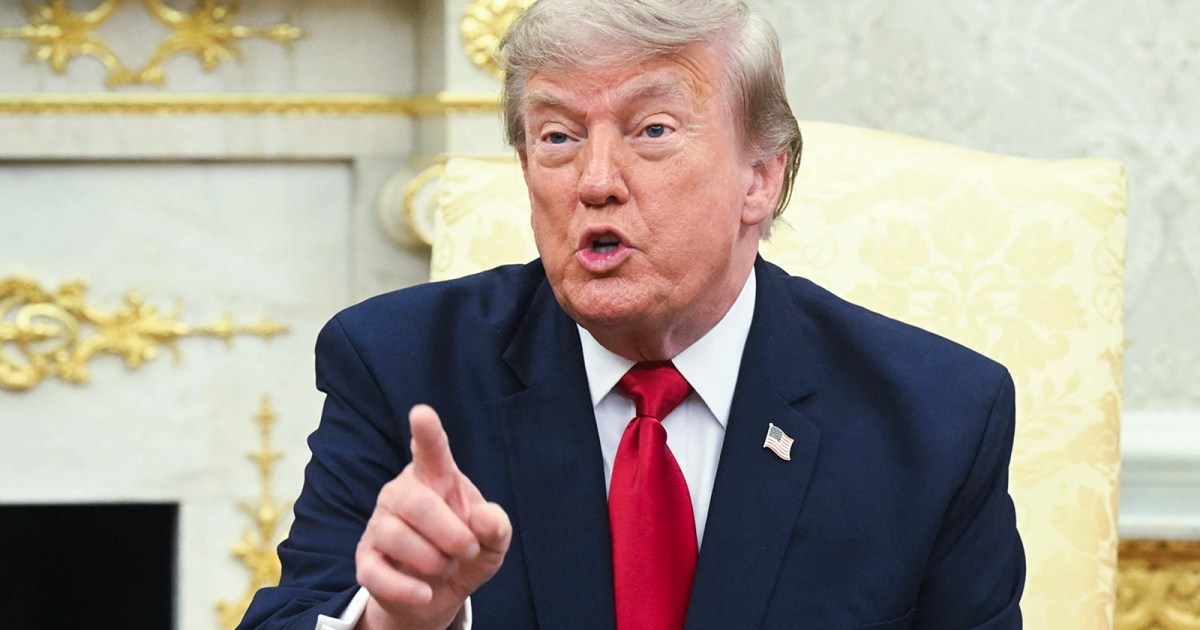
Trump imposes new 50% tariff on some Canadian goods
President Donald Trump signed three proclamations imposing an additional 50% tariff on certain Canadian goods, the White House announced on Monday.
Read more Trump demands Canada show more concern for American air quality than he does
Senior administration officials announced the action during a call with reporters, saying the proclamations were issued under Section 338 of the Tariff Act of 1930, which allows the president to respond to discriminatory treatment of U.S. commerce by foreign governments.
The officials said the administration determined Canada has continued to impose “substantial retaliation against the United States” and has discriminated against American motor vehicles, alcohol and dairy products.
The new tariffs will apply to all covered Canadian goods regardless of whether they qualify for duty-free treatment under the U.S.-Mexico-Canada Agreement.
The administration said the tariffs will take effect in 30 days.
Each proclamation imposes the 50% tariff on a different category of Canadian imports, covering products ranging from wine and hockey sticks to cement. The tariffs will apply to covered goods regardless of whether they qualify for duty-free treatment under the U.S.-Mexico-Canada Agreement, but exemptions include energy, potash, products already subject to Section 232 tariffs and certain goods such as fish and critical minerals.
The new tariff marks the latest escalation in trade tensions between the U.S and Canada, though administration officials rejected suggestions that the action amounts to a trade war.
“This is not a trade war with Canada,” one senior administration official told reporters, describing the tariffs as “defensive measures” taken by the administration.
The announcement comes a day after Trump and Canadian Prime Minister Mark Carney attended the FIFA World Cup final, where the two leaders met briefly.
Read more Trump’s data center boosterism is a gift to Democrats
Asked whether the tariffs were discussed during that meeting, a senior administration official said Sunday’s event “was not a working visit” and that, from the administration’s perspective, “it was not a visit to talk about trade and tariffs.”
Relations between Trump and Canada, longtime allies, have grown increasingly strained during the president’s second term. Trump has repeatedly threatened tariffs on Canadian goods and has, at times, suggested Canada should become the “51st state” — remarks that Canadian leaders have firmly rejected.
Last week, Trump threatened tariffs over smoke drifting south from the Canadian wildfires into the United States. A senior administration official said Monday’s action is separate and the president is still considering options for potential wildfire-related tariffs.
Ontario Premier Doug Ford immediately urged Canada to respond “tariff for tariff, dollar for dollar” if they take effect.
The U.S. and Canada have held substantive discussions about trade barriers and strengthening North American economic security, a senior administration official said, but the two counties are not currently engaged in formal trade negotiations and offered no timeline for when talks might begin.
Trump has frequently used steep tariff threats as leverage before delaying, scaling back or suspending them after negotiations.
In 2025, he postponed tariffs tied to Canada and Mexico and exempted many goods covered by the USMCA. In January, he also dropped tariffs he threatened against several European allies after announcing a NATO-backed framework for cooperation on Greenland and Arctic security. Trump also abandoned earlier suggestions that the U.S. could use force to acquire the island.










Post Comment